Six Honest Things I'd Tell Any Parent About to Start Their Kid on Piano
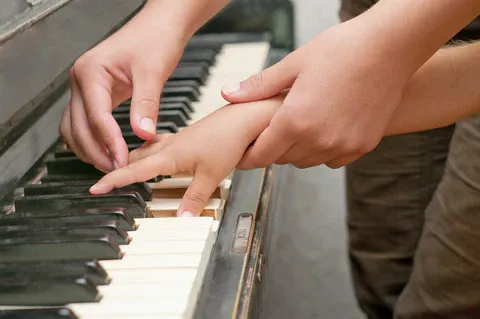
A few years into being a practice parent, some things look different than they did before we bought the piano.
Our kid has been learning piano for a while now. Lately friends keep asking me about it — which piano to buy, how to find a teacher, will the kid stick with it — so I figured I’d just write down what these years of being a practice parent have actually felt like.
This isn’t a guide. It’s just a few honest things from a regular piano parent who has already stepped on the rakes.
1. If you can afford a real piano, buy a real piano
The differences between a keyboard, a digital piano, and an acoustic piano are neither huge nor trivial. But unless you genuinely can’t fit one in the room or your neighbors will revolt over the noise, buy a real acoustic piano if it’s within your means.
Don’t let the sticker price scare you. The piano isn’t the expensive part — the lessons are. And lesson fees go up as the kid progresses.
Do the math: 53 weeks a year, our teacher charges ¥600 per hour, one lesson a week — that’s ¥31,800 a year. Two years of lessons already exceeds what most domestic new pianos cost.
There’s another benefit: the more expensive the piano, the less likely anyone is to quietly let it become furniture. You won’t tolerate watching it collect dust. Imported pianos also hold their resale value far better than domestic ones — if it really doesn’t work out, the secondhand market is there.
So pick the upper end of what you can afford, not the lower end.
2. The biggest factor in how well a kid plays isn’t the teacher — it’s the parent
People often hear our kid play and ask if I can introduce them to our teacher. What are her credentials, what’s her background, etc.
Honestly, the person putting in the most work isn’t the teacher. It’s my wife.
She memorizes every point the teacher makes in the lesson. At home, she sits with our kid through anywhere from one to several hours of practice every day. When the kid wants to quit, is tired, frustrated, or inventing excuses, she’s the one keeping him on the bench, getting through the technique drills and the assigned pieces.
Tears and screaming are a regular occurrence. “Joyful piano time with a happy parent and a happy child” is a statistical anomaly.
3. “Playing the right notes” is the entry-level part. Expressing emotion is the real skill.
Before our kid started, I assumed “right notes + steady rhythm = good playing.”
It turns out that just getting to right notes and steady rhythm requires nailing fingering, hand shape, breathing, posture — every detail.
A MIDI playback of sheet music has all the right notes and perfect rhythm, and it still sounds dead. The real skill of a pianist shows up in being able to express something through the music — using the weight, length, and speed of each note to push out the emotion they want to convey.
That part takes a kid years of practice to even start touching.
4. Don’t rush to make your kid perform. Spend the early years on fundamentals and theory.
Given enough time, any kid can “get through” any piece.
But actually learning piano is much more than playing pieces — it’s a large body of music theory, patterns, and techniques. With enough training, a kid can develop the ability to name any note you hit on the keyboard, and even break a chord down into its component notes by ear.
In the early years, do not push for shortcuts. The “let me show you off to relatives” mindset is the most damaging one. The time should go into fundamentals and theory, not into rushing through a few more “impressive-sounding” pieces.
5. Learning piano is not a happy experience
A lot of parents sign their kid up with a romantic idea in mind: “I want my child to be able to sit at the piano and pour out their feelings when they’re happy or sad someday.”
The reality is that kids spend most of their learning process not enjoying it. Boredom, repetition, and constant correction make up the bulk of practice time.
Before our kid started lessons, he used to wander over to the digital piano and improvise little tunes he thought sounded nice. Since he started learning, he has almost never sat down at the piano on his own.
I’m pretty sure most kids are like this. The moment something turns from an interest into a daily mandatory task, nobody wants to do it voluntarily anymore.
This is worth thinking through before you sign up.
6. Piano is actually one of the cheaper instruments
A counterintuitive one to end on: among the structured instrument-learning paths, piano is on the cheaper end.
Three reasons:
- Lots of people learn it, so there are plenty of teachers and the market is competitive;
- You rarely need to “upgrade” the instrument, so one good piano can last the whole journey;
- The price range of the instrument itself is wide — there’s something for every budget.
If your kid picks a niche instrument, fees go up and teachers are harder to find. Even instruments that already have a sizable learning population — violin, cello, the wind family — work out more expensive than piano when you add it all up.
Writing this out, I realize these six points are really aimed at parents who are still on the fence about starting their kid on piano.
If you’re about to begin, I hope this leaves you with fewer fantasies and a little more preparation.
If you’re already on the road — fellow practice parents, hang in there.